Change & perspective
Progress isn’t a competition
When somebody else’s activity changes how you feel about your own perfectly good walk.
 Runners Gateway · 3 min read
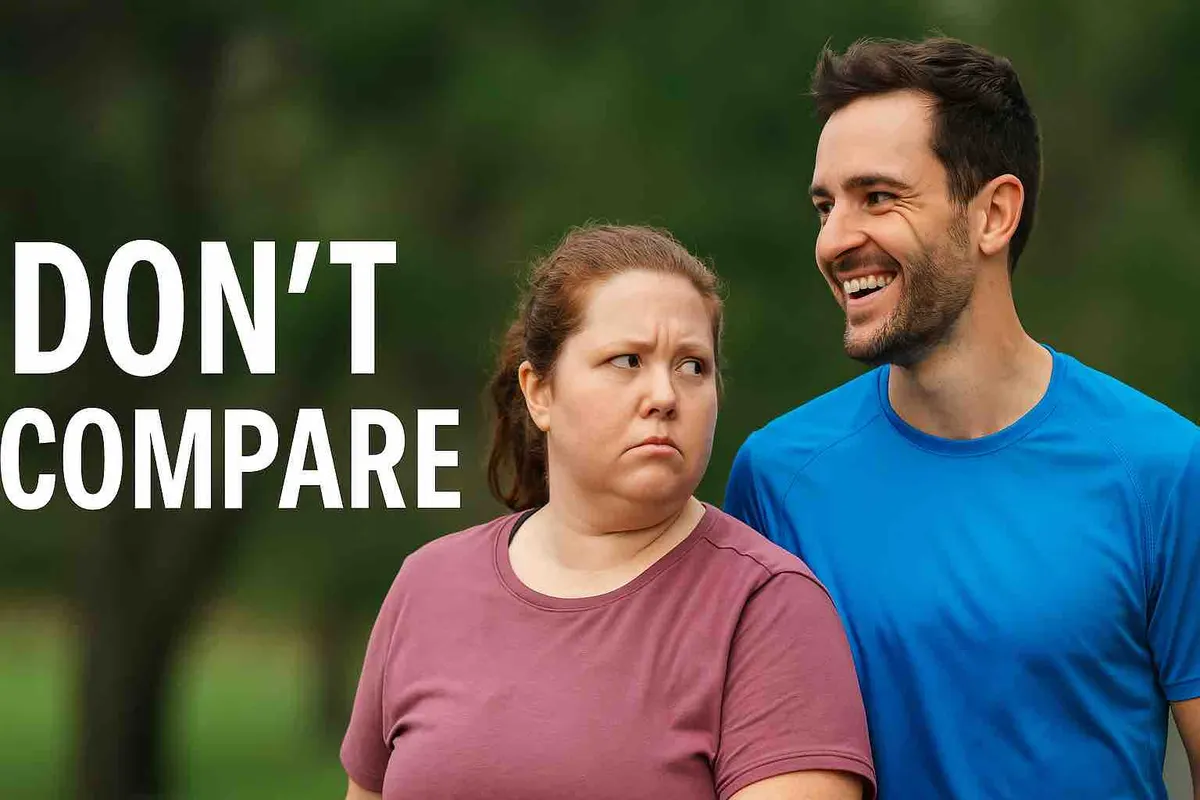
Imagine coming home pleased with a walk. You got outside, enjoyed the route, and made a little time for yourself. Then you open an app and see somebody’s long run, followed by a personal best, followed by a training week that looks as though it belongs to a different species of calendar.
Suddenly your walk feels small.
The walk hasn’t changed. The standard you’re using to judge it has.
That’s the bit of comparison I want to pay attention to: the moment somebody else’s activity quietly becomes the measure of what your own should have been.
A perfectly good result can belong to somebody else
The person sharing their long run may be delighted with it. Good. They don’t need to make it less impressive to protect the rest of us from an uncomfortable thought.
Equally, their result doesn’t set your next assignment.
You don’t know everything behind the number, and you don’t need to. Even if you had their entire training history, you would still have your own time, interests, circumstances, and reasons for being outside.
You can admire something without adopting it as an expectation.
That takes a little honesty when the feeling has already arrived. Perhaps you’re inspired. Perhaps you’re disappointed with your own progress. Perhaps you’re tired and scrolling when you’d rather be doing something else. Those are different situations, and they don’t all need a bigger running goal.
Return to what you went out for
Before you saw the other activities, what had pleased you about yours?
If you wanted time outside and enjoyed the walk, that information still stands. If you were working towards a particular training goal, use the relevant plan and your own experience to understand how it went.
Numbers can help. If improving a time matters to you, it’s reasonable to notice whether it’s improving. You don’t have to pretend you’ve stopped caring about performance. The useful question is whether the comparison tells you something you can act on.
Notice and record what helps offers a way to keep the details that matter to your own decisions. A short note about what happened may be more useful than another look through somebody else’s week.
You can change what you pay attention to
Sometimes the simplest response is to put the screen down for a while. You can enjoy somebody’s company and still find their constant activity updates unhelpful on a particular day. Where a service offers controls over what you see, you can use them.
You can also let your walk remain private. Sharing it is optional, and a public response isn’t required to complete the experience.
Other people will keep doing interesting things. Some of them will be faster, further, or more demanding than what you did today. You can be pleased for them and still be pleased you went for your walk.